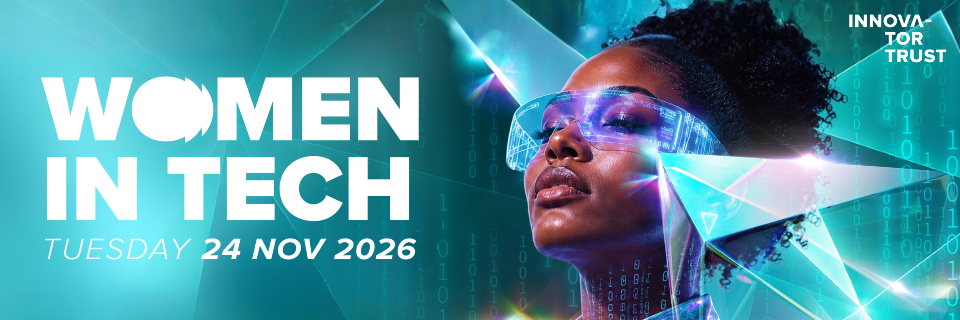
Innovator Trust Women in Tech Awards (WIT) 2026 speakers bring experience in digital business, AI, market access and public leadership.
Belief is easy to print on a banner. In tech, it has to survive a funding meeting, an acquisition system and the moment a customer clicks “pay”. Under this year’s theme, Tech Believers, the Innovator Trust has selected thought leaders to examine the questions behind that test at the Women in Tech Awards (WIT) 2026, taking place on 24 November.
The speakers will discuss how technology can support Africa’s growth industries, what agentic AI can do for tech SMMEs, how smaller firms reach markets and why women need authority over decisions about products, capital and policy. The fireside chat, The Audacity to Believe, asks what it takes to lead when those decisions carry consequences.
“Tech Believers matters because believing in a technology business takes nerve,” notes Tashline Jooste, CEO of the Innovator Trust. “A founder has to back her product, hire a team and persuade customers that her solution will work. WIT brings women who comprehend those decisions into the same room. There is a real energy when someone says, ‘I have faced that too,’ then shares what helped. A connection made here can become practical advice, a supplier introduction or a conversation with a buyer who needs what your business offers. I’ve seen first-hand how a timely connection can fast-track a woman’s progress in tech by putting the right buyer, partner or adviser within reach while the opportunity is live.”
The Leadership Gap
The numbers make the leadership question clear: women accounted for 46% of South Africa’s ICT employees in 2024/25, yet held only 1,351 of 4,700 top-management posts. That gap affects who can approve investment, choose suppliers and decide which products get built, with practical consequences for the businesses and communities technology is meant to serve.
Building the Technology
For those decisions to translate into practical outcomes, the sector needs people who can build the technology and businesses prepared to use it.
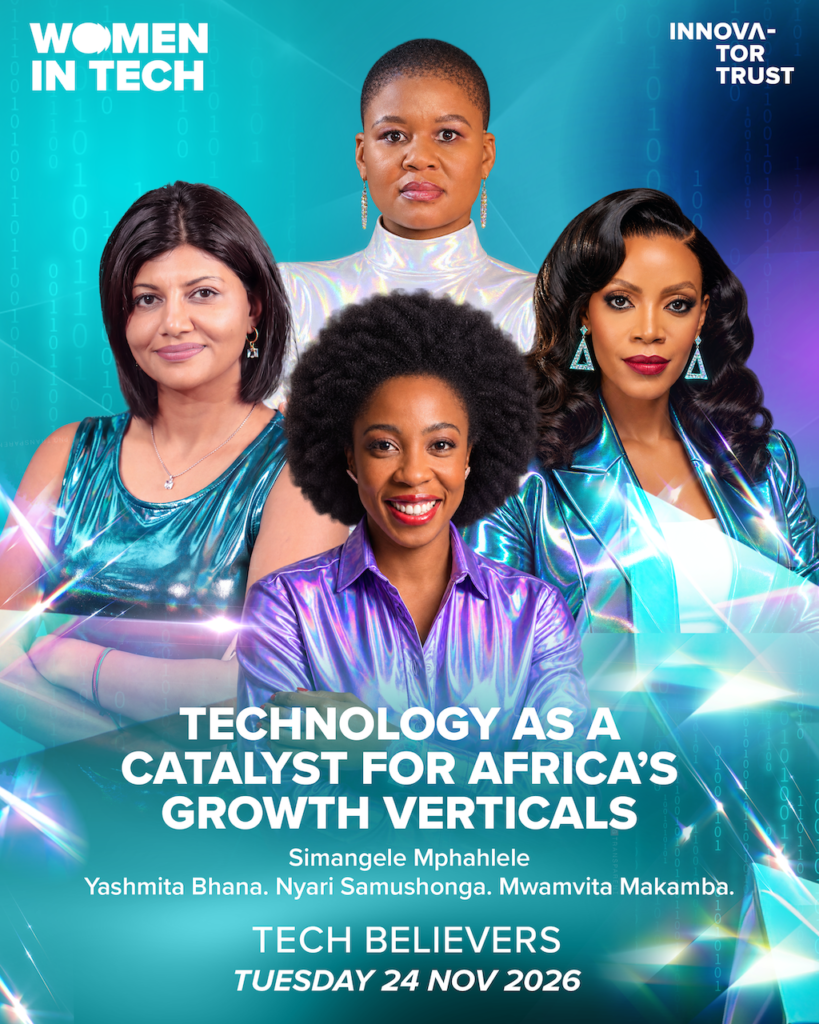
- Nyari Samushonga, Executive Chair of WeThinkCode, works to develop software talent.
- Yashmita Bhana, Founder and Group CEO of Nihka Technology Group, has built the South African technology company over 18 years. An engineer by training, she leads work across cybersecurity, data and artificial intelligence, cloud and digital platforms, managed services and technology innovation.
Technical skill builds the tool; a clear business purpose gives it a job.
Applied AI, Policy and Competition
That connection between technical capability and practical value is especially clear in applied AI, where solutions can address challenges such as farm biosecurity.
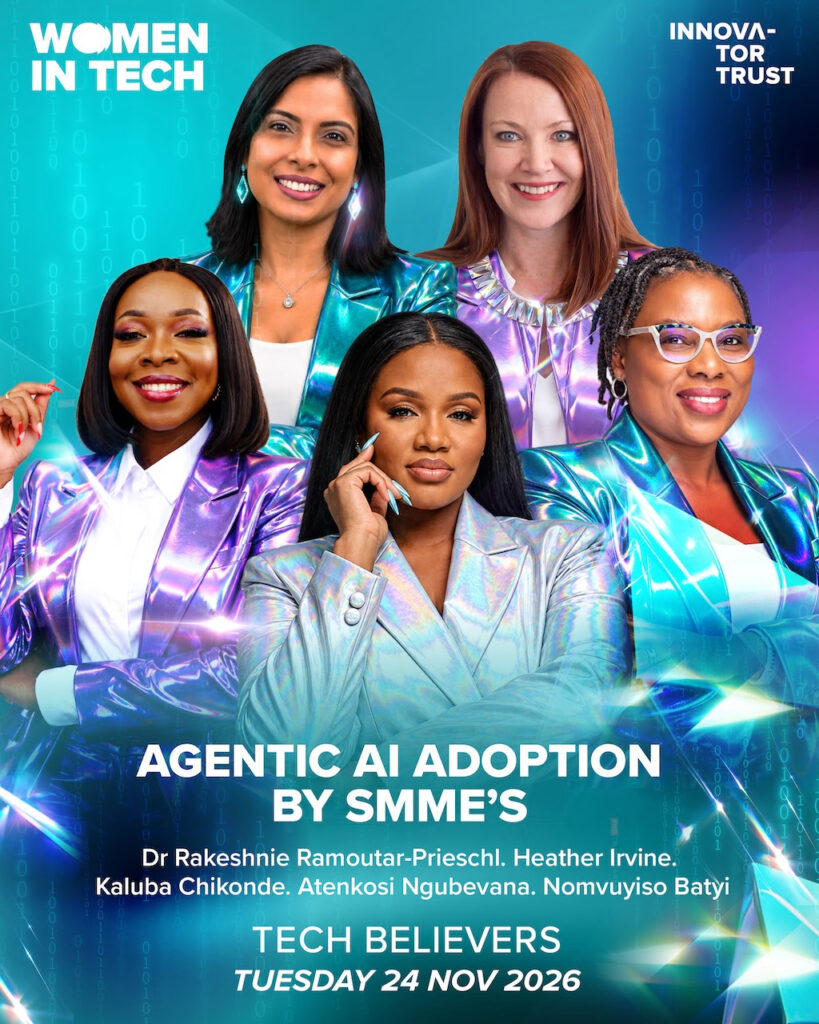
- Kaluba Chikonde, known as “The Queen of Data”, is a Clarity Engineer, AI strategist, keynote speaker and Senior Data & AI Engineering Lead. At Livetec Systems, she leads production-grade data and AI platforms addressing biosecurity challenges, including an AI biosecurity assistant and real-time disease alerting systems used by farmers.
- Dr Rakeshnie Ramoutar-Prieschl has worked in technology innovation and now directs internationalisation and strategic partnerships at the University of Pretoria.
Turning AI tools into practical business value also depends on the policies and competition rules that shape how they are developed and used.
- Nomvuyiso Batyi is CEO of the Association of Comms and Technology (ACT), a non-profit organisation that serves as a unified voice for South Africa’s ICT sector.
- Heather Irvine advises on technology competition and law.
Together, their experience gives founders useful questions to take away: what work can agentic AI do, what data will it use, what rules apply, and will the investment pay? Even a useful tool needs a buyer.
Access to Capital and Markets
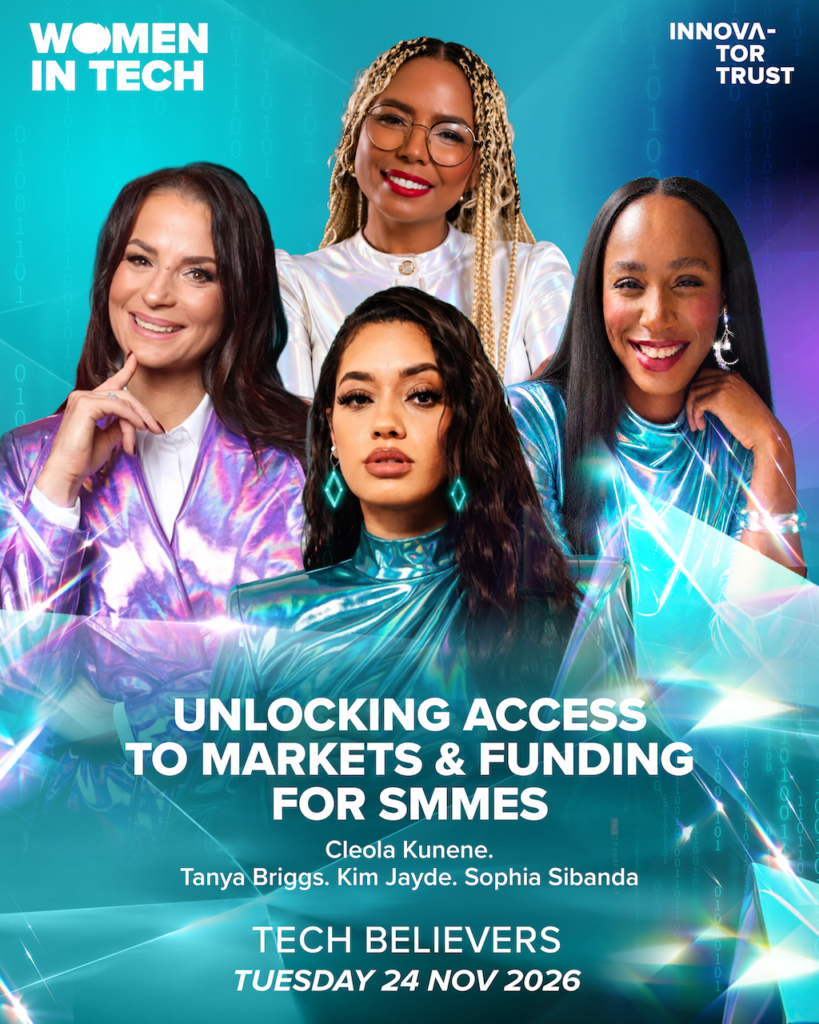
- Cleola Kunene is Fund Partner and Executive Director at Equate, where she leads Equate Trade Finance, a debt fund designed to unlock capital for South African SMEs. Formerly Head of SME Development at the JSE, she built the continent’s benchmark SME acceleration programme.
- Tanya Briggs, Supply Chain Business Partner (B-BBEE) at Vodacom, has more than 17 years of experience in procurement, supplier development, transformation, corporate governance and ESG-aligned business practices. She designs and implements supplier development initiatives to help SMMEs strengthen their competitiveness and grow within corporate supply chains.
Alongside the procurement pathways that specialists like Briggs and Kunene help SMMEs navigate, visibility can open another route to market for creative businesses, taking a strong audience beyond its original platform.
- Kim Jayde is a Pan-African creative entrepreneur, MC and host, founder of KJ Productions, and creator, director and host of Kickin’ It with Kim Jayde. Her self-funded YouTube series became an eight-episode Bravo Africa broadcast reaching audiences across 52 African countries. A Forbes Africa 30 Under 30 honouree, she has spoken and served as a panellist at Cannes Lions in 2025 and 2026.
Jayde’s story shows how visibility can carry a creative platform across the continent. For SMMEs, visibility is only the start.
From Visibility to Influence
Visibility can extend a platform’s reach; leadership determines how influence is put to work.
- Ati Ngubevana is Group Executive Head: Intelligent Automation (IA) & Artificial Intelligence (AI) Go-To-Market at Vodacom Group, where she leads the strategic adoption, commercialisation and scaling of AI and automation solutions across Africa. She drives AI-enabled transformation through intelligent automation, data-driven decision-making and responsible AI practices, helping organisations unlock measurable business value.
- Mwamvita Makamba, a Tanzanian entrepreneur, investor and author, is Founder and Chair of MMConnect Africa Group. After 14 years at Vodacom Group, she leads ventures spanning inclusive finance, clean and portable energy, the carbon economy, lifestyle and experiences across Africa.
The influence of these decisions extends beyond the boardroom and technology sector to businesses shaping how people live and work across Africa. Together, these careers widen the conversation from visibility to influence, and from influence to the actual authority women hold when decisions affect others.
The Audacity to Believe
The closing fireside chat turns to the influence of women in business and public life, bringing together two of South Africa’s most distinguished leaders: Irene Charnley and Professor Thuli Madonsela, South Africa’s former Public Protector. Charnley intimately understands the demands of building and leading in telecommunications, while Professor Madonsela has held public authority to account. Their careers raise a sharper question: what does it take for women to claim authority, make the difficult call and stand behind it when the stakes reach beyond the boardroom?
The WIT Awards
Taken together, these speakers show Tech Believers in action: women building technology and businesses, widening access to markets and shaping decisions that will influence Africa’s digital future. The WIT Awards bring that wider story into focus in South Africa’s ICT sector, recognising female-owned SMEs that have participated in the Innovator Trust’s Start-up Enterprise Development, Youth Entrepreneurship or Supplier Development programmes. In doing so, they give this year’s theme a practical meaning: celebrating women who are already building businesses and shaping South Africa’s technology future.
Event Information
- Event: Innovator Trust Women in Tech Awards (WIT) 2026
- Theme: Tech Believers
- Date: 24 November 2026
- Format: Hybrid
- Virtual registration: here.
For more tech news, follow us on socials: PressIcons

Leave a Reply